Here’s the new edition of The Weekly Connect. Check it out and sign up to have it delivered to your inbox!
National progress in reducing chronic absenteeism slows in 2025.
Federal Tax Credit Scholarship Program to expand education funding options in 2027.
Utah program encourages parents to support preschool math learning at home.
Research and Practice
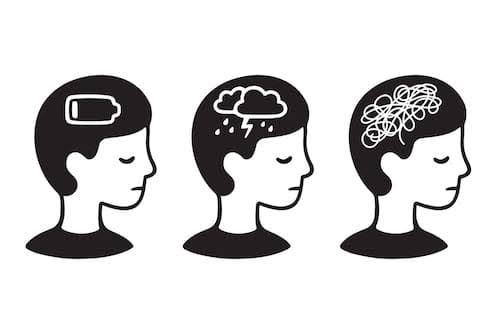
Journal of Child Psychology and Psychiatry: Change in the Severity and Impact of Child Psychiatric Disorders Over 3 Years: An Analysis of Trends Using the National Child Mental Health Surveys of England From 1999, 2004, and 2017
The number of children and adolescents with psychiatric disorders has increased in recent years; one in six children in England now have a diagnosis. The present study is the first to test mental health and functional outcomes of children over time with diagnosed psychiatric disorders. The researchers used a sample of participants aged five to 13 who completed a survey in 1999, 2004, or 2017, and a follow-up assessment three years later. Findings indicate that children in 2017 were more likely to experience worse mental health in their three-year follow-up compared to children from previous surveys. Additionally, children with a psychiatric disorder had worse mental health and functional outcomes in 2020 compared to previous cohorts. Because the final assessment of participants was conducted in the summer of 2020, during the pandemic, these results should be interpreted cautiously. Future research should continue to examine the increase in psychiatric disorders among children, which the researchers say is a “major public health concern.”
Child Trends: Health Care Access and Special Care Needs Are Associated With Developmental Well-Being at Age 3
New research from Child Trends, a nonprofit research organization, found that three-year-olds with access to high-quality health care had improved well-being compared to those without health care access. The researchers analyzed data from the National Survey of Children’s Health, a nationally representative survey, which included parent-reported measures of their children’s developmental well-being (measured in five domains: early learning skills, social-emotional, self-regulation, motor, and health skills) and healthcare access and quality. A child with a medical home—a consistent place to receive medical care—was associated with higher odds of being “on track” for overall developmental well-being. Children with special health care needs, which are defined as those needing prescription medication or having more complex medical needs, also had a higher likelihood of having “on track” development in social-emotional, self-regulation, and physical health domains compared to their peers without special health needs. Adequate and continuous health insurance was only associated with improved self-regulation and physical health for children without special health needs.
K-12 Dive: Progress to Reduce Chronic Absenteeism Slows Nationwide
According to data released by the American Enterprise Institute, national progress in reducing student chronic absenteeism has started to slow down. For example, in 2022 and 2024, the absentee rates were 28.3% and 23.5%, respectively. In 2025, the rate decreased slightly to 22.6%. However, of the 18 states that have taken a pledge to reduce their chronic absenteeism rates by half within five years, significant improvements have been made. The pledge, known as the 50% Challenge, is an initiative launched by Attendance Works, EdTrust, and Nat Malkus with the American Enterprise Institute. Chronic absenteeism rates in these states have decreased by 5.7% between the 2023-24 and 2024-25 school years, compared to an average reduction of 3.2% for states that did not participate. The research highlights Iowa and Rhode Island for their significant progress in reducing chronic absenteeism rates through holistic, community-centered approaches, including an absenteeism prevention plan and student attendance data dashboard.
Policy
AP News: Federal Scholarship for Private School and Homeschooling Opening to Most Kids in At Least 30 States
Around 96% of children in over 30 states can apply for a new federal scholarship to pay for private school, homeschooling, and other school expenses. The Federal Scholarship Tax Credit, the first national school choice scholarship program, will launch on January 1st, 2027. Taxpayers can donate up to $1,700 to a scholarship program in a participating state and receive a federal tax credit for the same amount. Scholarship organizations will then determine how much each child will get based on available funds and student needs. Families that make up to three times the area’s median income are eligible. The program differs from state voucher programs because students in public schools can still qualify for a scholarship to be used for tutoring or a special education program. Federal officials also shared that it will be easier for low-income students and foster children to apply due to exceptions needed for income verification.
The Hill: Head Start Fight Reaches Tipping Point As Advocates Push Back Against Proposed Trump Changes
After the Trump administration announced changes to Head Start, which provides early childhood education for low-income families, tens of thousands of people have submitted public comments regarding concerns about the program’s impact on families. The new changes dictate that providers will follow their state’s requirements on class size, educational programs, background checks, and transportation options. All programs will also be conducted entirely in English. Those who have submitted comments are worried that the quality of programs will vary drastically by state because of how much state policies differ. For example, only 19 states have the same standards as Head Start’s current staff-to-child ratio for four-year-olds, and only six states have the same for three-year-olds. The Trump administration will review the comments and come out with a final rule, which will likely be challenged in court if close to the current proposal.
Around the Nation

National Public Radio: Schools Are Experimenting with AI with Little Evidence or Policy to Guide Them
Across the country, schools are experimenting with AI in different ways, from supporting lesson plan creation to tracking progress for special education students. In one school in Dayton, Ohio, students attended sessions with a social-emotional learning chatbot named Jordan. The school is primarily for students who struggle with behavioral and academic challenges, and the goal of the sessions is for students to open up to the chatbot about their emotions and experiences in and out of school. The school found the program to be a success and will continue to use Jordan and other similar social-emotional AI tools. However, many educators and researchers struggle to identify whether AI is helpful or harmful to students. In a school district in western New York, a plan to engage students with an AI-powered humanoid robot was stopped due to concerns around student data privacy and safety. One expert on AI and education shared that there needs to be caution using AI, especially for students from marginalized communities, while another shares that students should engage with AI to learn how to use it in a safe space.
The Hechinger Report: One State Bets on Parents to Boost Preschool Math Skills
Because many parents do not feel qualified to teach math to their young children, educators have created initiatives to encourage parents to use math talk in hopes of reducing the achievement gap between low-income and high-income students. Research has found that entering kindergarten with math skills, including counting and arithmetic, predicts future math achievement and is linked to higher rates of college enrollment and higher wages as adults. The Utah STEM Action Center’s MILO & Friends program encourages parents to start talking about math with their children. During an event at an elementary school outside of Salt Lake City, parents played a cooperative math game with their children called Happy Bunny, which helps children practice simple math skills. Across the country, only a few programs encourage parents to talk to their children about math. While no research has been conducted on the academic outcomes of the intervention for children, studies have found that parents have more confidence and positive feelings about math after completing the program.