Here’s the new edition of The Weekly Connect. Check it out and sign up to have it delivered to your inbox!
Summer program costs and access barriers leave many families without affordable opportunities for children.
Childcare subsidy waitlists are growing as families face rising costs and reduced support.
Schools with later start times report better student sleep, engagement, and well-being.
Research and Practice

Afterschool Alliance: The Summer Struggle for Everyday Families: Affording the Opportunities Parents Want for Youth
A new report from Afterschool Alliance examines the desire and affordability of summer activities for families and youth. While families want their child to experience a structured summer program, such as a camp, summer school, or internship, half of children are unable to participate in any type of program. Four in ten families cite that the cost of programs makes it inaccessible, while others report difficulty finding transportation, opportunities in their community, or programs with available spots. These barriers are more likely to impact low- and middle-income families, who spend a greater proportion of their paycheck on summer programs. Parents prioritize enrolling their children in safe summer programs with access to the outdoors and limits on screen time. The report recommends that communities invest in more activities that are high-quality and affordable, which would have a wide range of benefits for all children.
See also: Federal Cuts Could Deepen Indiana’s Already Severe Summer Program Shortage
Dartmouth College, Harvard University, and Stanford University: From Learning Recession to Learning Recovery: Understanding the Sources of U.S. K-12 Improvement
The newly released Education Scorecard found that the United States entered a “learning recession” in 2013, with students continuing to have low math and reading scores. In 2026, grade 8 and grade 4 reading scores hit their lowest point since 1990 and 2003, respectively. According to the researchers, the decline in learning outcomes may be explained through two trends: the reduction in test-based accountability and the rise in social media usage. The largest gains in academic outcomes since 2022 have occurred in the highest and lowest-income school districts. The researchers suggest that increased academic outcomes from the lowest-income school districts could be attributed to federal pandemic relief funds; they found that each $1,000 invested per student through the Elementary and Secondary School Emergency Relief Fund was associated with additional gains in math and reading. Additionally, high rates of chronic absenteeism have impacted academic recovery for students of all income levels. The authors suggest further exploration of factors that have impacted academic achievement, including how federal, state, and school-level systems can work together to develop strategies to mitigate these impacts, such as implementing early literacy reform and developing strategies to lower student absences.
The Journal of Child Psychology and Psychiatry: What Makes a Lonely Child: Environmental, Health, and Multimodal Neuroimaging Correlates of Prospective Loneliness in the ABCD Study
Feeling lonely is linked to negative health outcomes, including poor mental health, cognitive development, and sleep problems. While children and adolescents experience high levels of loneliness, there is limited research on its impact during late childhood. Researchers utilized data from the Adolescent Brain Cognitive Development Study to measure nine to ten-year-olds’ feelings of loneliness, environmental exposures, and mental and physical health at baseline and after three years. Reported by their parents, 12% of participants were identified as feeling lonely, with a majority of them continuing to experience loneliness over the next three years. Children who were older, male, or of a minority or racial or ethnic group were more likely to re-report feeling lonely. Loneliness was linked to all mental health problems, as well as worse sleep, higher risk of medical conditions, and higher BMI. It is also associated with 40 environmental variables, such as children with a parent with a mental health disorder or in a low-income family were more likely to report feelings of loneliness.
Policy
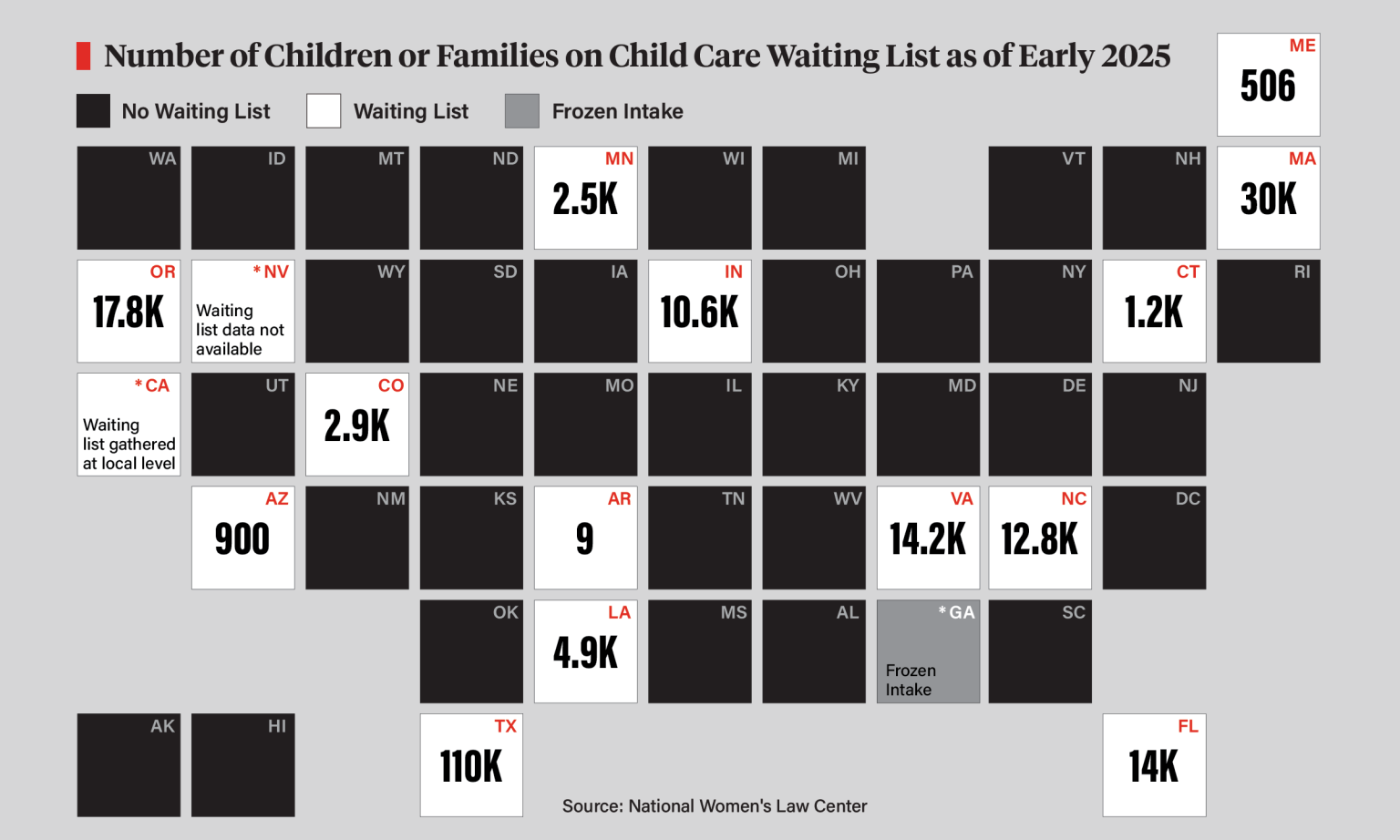
The 74: With 400K Children on Childcare Assistance Waitlists, Families Are Left Scrambling
In 2025, one-third of states had a waitlist or freeze on applications for childcare assistance, leading 400,000 children to be placed on waitlists. It is estimated that the Child Care and Development Block Grant, the main source of federal income for families to support childcare costs, is serving only one in six of all eligible children. The families waiting for a childcare subsidy will need to pay for care out of pocket, which would likely require them to forgo paying for other necessities, such as rent, utilities, and food. Simultaneously, child care centers that rely on a certain number of families enrolling with child care subsidies will have to cut staff wages or go out of business. Various policy changes have impacted this long waitlist, including the ending of pandemic-era funding, cuts to Medicaid and SNAP, and the rising cost of living for families, which have led more families to seek assistance to pay for child care programs.
The 74: A Year Ago, Experts Worried About NAEP’s Future. Now, the Test is Expanding
The National Assessment Governing Board, which sets national standards for student learning through the Nation’s Report Card (NAEP), approved a new schedule that includes 12th-grade math and reading, eighth and 12th-grade civics, and eighth-grade science assessments. While state participation is optional, the new assessments help education officials gather more data for their state in a shorter time frame. Board members had differing views on how beneficial the assessments would be in informing state-wide education reforms. They assert that some states are likely to use their own proficiency measurements instead of NAEP data. Others believe that gathering state-level data for high school seniors is unhelpful due to low student motivation or scheduling constraints. The civics test will be updated from the last one administered for seniors in 2010, and the science section will more closely match states’ eighth-grade proficiency requirements. The new testing schedule will take effect in 2028.
Around the Nation

The Hechinger Report: Many Boys Aren’t Interested in School. Can Opening More Career-Focused High Schools Help?
In many technical schools across the country, boys are more likely to enroll in and benefit from these education programs compared to girls. One study examining boys in Connecticut’s technical schools found that boys had increased attendance, test scores, graduation rates, and earnings compared to girls in the school, whose scores were the same as those of peers who were similar, but did not get accepted, into the school. While experts are unsure why technical education programs impact boys more positively than girls, it may be that boys are more excited and engaged during work-based learning or benefit more from smaller class sizes or more time with teachers. With boys falling behind on measures of educational achievement, kindergarten readiness, and college completion compared to girls, advocates believe that creating more technical education options could support boys’ educational growth. The increasing demand for programs across the country has led school leaders to develop proposals for creating more schools, including costs associated with how to properly staff and admit students.
Chalkbeat: Teens Are Sleeping Less Than Ever. Experts Say Schools Can Help by Pushing Back Start Times
Schools have started to push start times later to ensure that students have enough sleep and are ready to tackle the day. Recent research has found that young people have worse quality sleep compared to previous decades, with adolescents having the worst average sleep duration in the last 30 years. Poor sleep can lead to a greater risk of chronic disease, injury, and mental health diagnoses. Across the country, school start times can vary, though later start times are often associated with better developmental outcomes and moods. Some states have also mandated later start times; a 2022 law in California mandated classes to start no earlier than 8:30 am for public high schools and 8 am for middle schools. At Mount Desert Island High School in Bar Harbor, Maine, the principal pushed back the school’s start time from 7:57 to 8:50 am. Teachers have reported that the later start has led teens to be more engaged in class and perform better academically.