Here’s the new edition of The Weekly Connect. Check it out and sign up to have it delivered to your inbox!
Low-income students participate in varsity sports at much lower rates.
Michigan increased ELL funding, but advocates say major funding gaps remain.
Student-led mediation is helping reduce conflicts and suspensions.
Research and Practice

Children and Youth Services Review: Child Protective Services Contact and Students’ School Connectedness and Absenteeism
Researchers examined school attendance and connectedness in a sample of fifteen-year-olds who had contact with Child Protective Services (CPS). Previous studies have found that over a third of children experience a CPS investigation by the time they reach age 18, which is associated with worse academic, physical, and social-emotional development. In the present study, the researchers examined survey responses from over 3,000 children and their parents at age five, nine, and 15. Of the sample, 20% of students had contact with CPS by age 15. They were more likely to have families with lower educational attainment and income, be Black, and be a U.S. native. Students with CPS contact had significantly higher rates of absenteeism, often due to health reasons or truancy (i.e., an unexcused absence due to a student’s own choice). Additionally, students with CPS contact reported lower levels of school connectedness compared to their peers, which was also associated with absenteeism. These findings highlight the importance of supporting these students in order to increase their school connectedness and decrease absenteeism rates.
American Enterprise Institute: Making the Varsity Cut: Who Plays High School Varsity Sports and Who Doesn’t
A new study examined data from high school varsity athletes in Indiana to understand differences in participation rates among certain demographics. Using data from the Indiana Department of Education and the Indiana High School Athletic Association, the researchers examined over 270,000 high school students in the 2024-25 academic year. While girls’ varsity participation rates were only two-thirds the rate of boys, this gap was explained by an increase in boy-only sports, such as football. Low-income students were only half as likely to play a varsity sport compared to their more affluent peers. However, school poverty alone did not explain this participation difference; the researchers hypothesize that the varsity participation gap might instead be due to high costs of playing sports even before starting high school. Lastly, students who played varsity sports were also more likely to be high-achieving. Future research and implementation directions should focus on engaging more students in sports, which can lead to improvements in attendance, academics, and future employment.
Policy
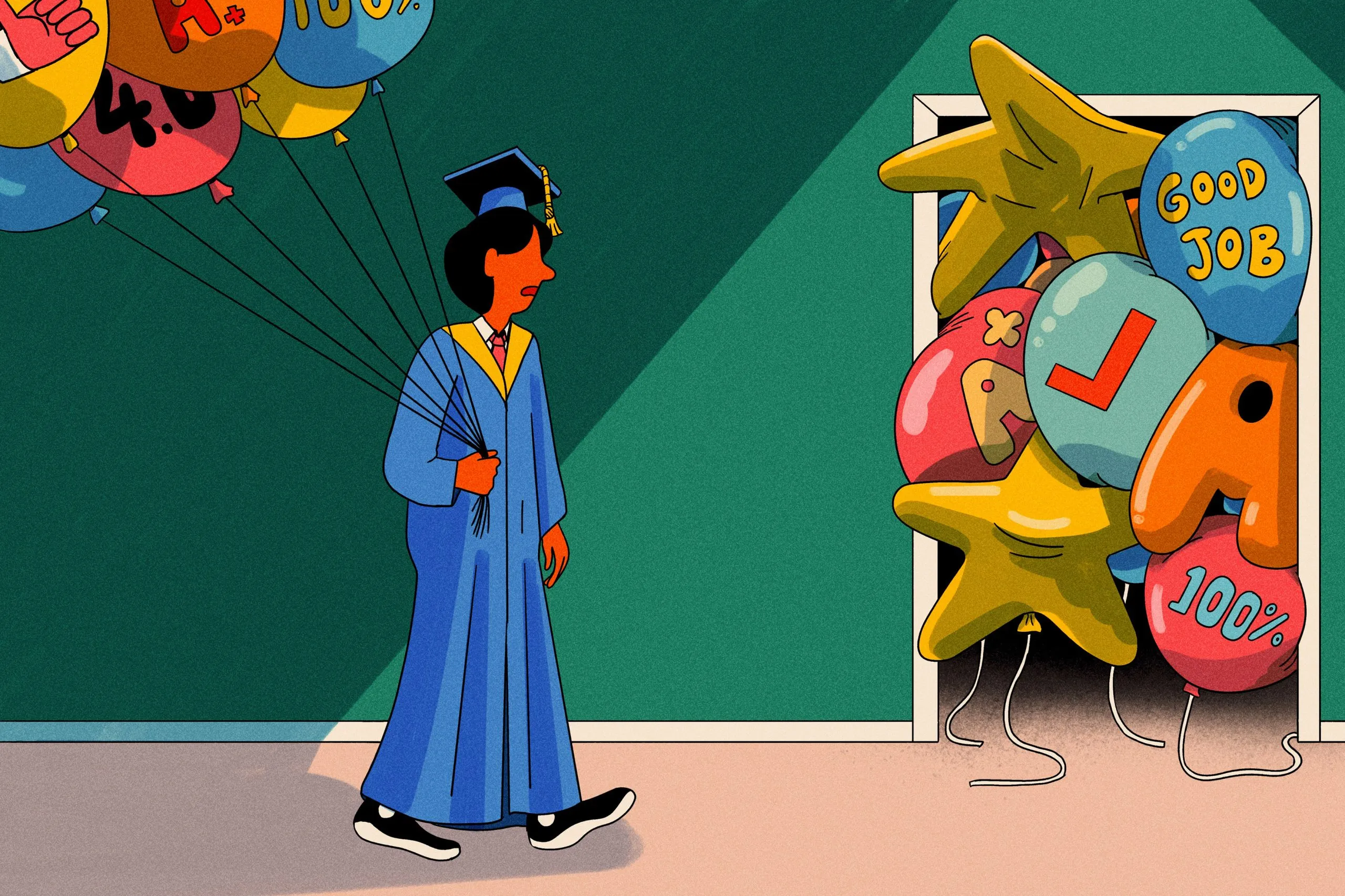
The Hechinger Report: The Emerging Fight Against Grade Inflation in K-12 Classrooms
While classroom grades and GPAs have increased over recent decades, standardized test scores continue to decrease. Education experts believe that these inconsistencies may be due to the use of grade floors, which require teachers to give students a minimum grade (often a 40% or 50%) instead of a zero on assignments. In July, government officials in South Carolina passed a law banning minimum grades in K-12 schools, which went into effect this school year. Districts that do not comply with the ban will lose ten percent of state funding. Students must also turn in missing assignments before they become eligible for credit and content recovery programs, and most standardized test scores cannot be counted toward a student’s progress. Proponents of grade floors share that they give students a greater chance of succeeding in a class and create a more equitable process. Conversely, other educators assert that implementing grade floors does not prepare students for a successful future. For example, in South Carolina, while 87% of students graduated on time, the state only considered 33% “college-ready” by graduation.
The 74: Michigan Increased Funding for English Learners by $12.5 Million. Advocates Say a Big Gap Persists.
This year, Michigan lawmakers increased state funding for English Language Learners (ELLs) by $12.5 million. The extra funding was sent to districts based on students’ scores on an annual English proficiency assessment, with each student in need of more support receiving additional funding of between $1,379 and $1,998. However, the state did not provide substantial funding for students who are nearly proficient in English; funding for each student with higher proficiency was $225, and students with near-perfect scores on the assessment received no extra funding. State and federal laws require all ELLs to receive services, and out of the 49 states that fund ELL services, Michigan is the only one to exclude some students from its funding formula. Michigan has historically ranked among the lowest in the nation for English language learner funding. Nearly half of the state’s English learners remained in specialized programs after six years, suggesting that students are not receiving adequate instruction to enable them to take all courses in English. Education experts and families are hopeful to improve state support for ELLs, especially as the population continues to increase in the state.
Around the Nation

The 74: Schools Have a Motivation Problem — AI Is Making It Impossible to Ignore
As students increasingly use generative AI to draft essays and solve homework equations, teachers have difficulty addressing chronically low student motivation. Several factors have contributed to this change. Since COVID, more students in traditional schooling programs believe that their class attendance is optional. Additionally, the majority of high school students use AI for their schoolwork, yet fewer than half reported that their coursework “challenges them” or “gives them the opportunity to do what they do best.” An educational psychologist shares that when teachers emphasize tests and grades, cheating with AI arises because students strive for efficiency. Instead, opportunities that balance student learning with other extracurriculars can help them grow, experience “hard fun,” and “show themselves what their minds are capable of.” For example, one teacher assigned students to solve a series of cold-case murders, a challenging experience that increased their motivation in the classroom.
Chalkbeat: Indianapolis Middle School Peer-Mediation Program Helps Lower Student Suspensions
Students participate in a decades-old peer mediation program at H.L. Harshman Middle School in Indianapolis, Indiana, that teaches them to resolve disputes with classmates to foster a better school climate. Peer mediation aims to address conflicts before they turn into physical altercations that need adult intervention. Students in need of a mediator, often for a fight with a friend, put their name on a list to be seen by a peer. The mediator helps them find the right words to express how they feel. After a conflict is resolved, both parties sign an agreement not to discuss their argument outside of the room, which aims to build trust in the mediation process and lessen feelings of embarrassment. This school year, more than 100 students applied to be mediators, and around 25 were selected to participate. The students go through the rigorous process in the hopes of being “a part of something, building something stronger” and to support their classmates.