Here’s the new edition of The Weekly Connect. Check it out and sign up to have it delivered to your inbox!
California’s community schools program reduced absenteeism and suspensions while boosting test scores, especially for high-need students.
New Mexico becomes first state to offer universal free child care, saving families about $12,000 a year.
Bronx high schoolers launched a gun violence–awareness streetwear line now sold in the NBA store.
Research and Practice

K-12 Dive: States Struggle with Increase in Special Education Complaints
The Center for Appropriate Dispute Resolution in Special Education (CADRE) released new data on special education state complaints from the 2023-24 school year. The number of written state complaints, which involve a state-led investigation on a special-education-related concern, increased by 22% from the previous school year. The majority of state complaints were resolved within 60 days, though this rate has dropped significantly over the past ten years. Most complaints came from California, Massachusetts, and Texas. Families who worked with mediators had higher agreement rates with the school districts, which may be due to mediators helping families reduce costs for cases and working with school officials more collaboratively. Experts believe that the national rise in state complaints is due to delays from the U.S. Department of Education’s Office for Civil Rights, which reviews disability discrimination concerns, as well as a decrease in certified special educators to support students.
Learning Policy Institute: Community Schools Impact on Student Outcomes: Evidence From California
The Learning Policy Institute released an analysis of the California Community Schools Partnership Program’s (CCSPP) impact on high-need students. CCSPP was founded in 2021 and is the largest community schools initiative in the United States. The study examines the first cohort of 458 schools that received up to $500,000 annually for five years to sustain existing community school initiatives. CCSPP schools experienced a 30% decrease in chronic absenteeism rates, a 15% reduction in suspension rates, and an increase in English language arts and math scores. Black students, English language learners, and low-income students had the largest improvements on these metrics compared to other students. Schools that had improved rates of chronic absenteeism saw greater gains; for each standard deviation increase in attendance rates, the impact on academic achievement doubled.
Policy
K-12 Dive: What Does the MAHA Strategy Mean for School Meals?
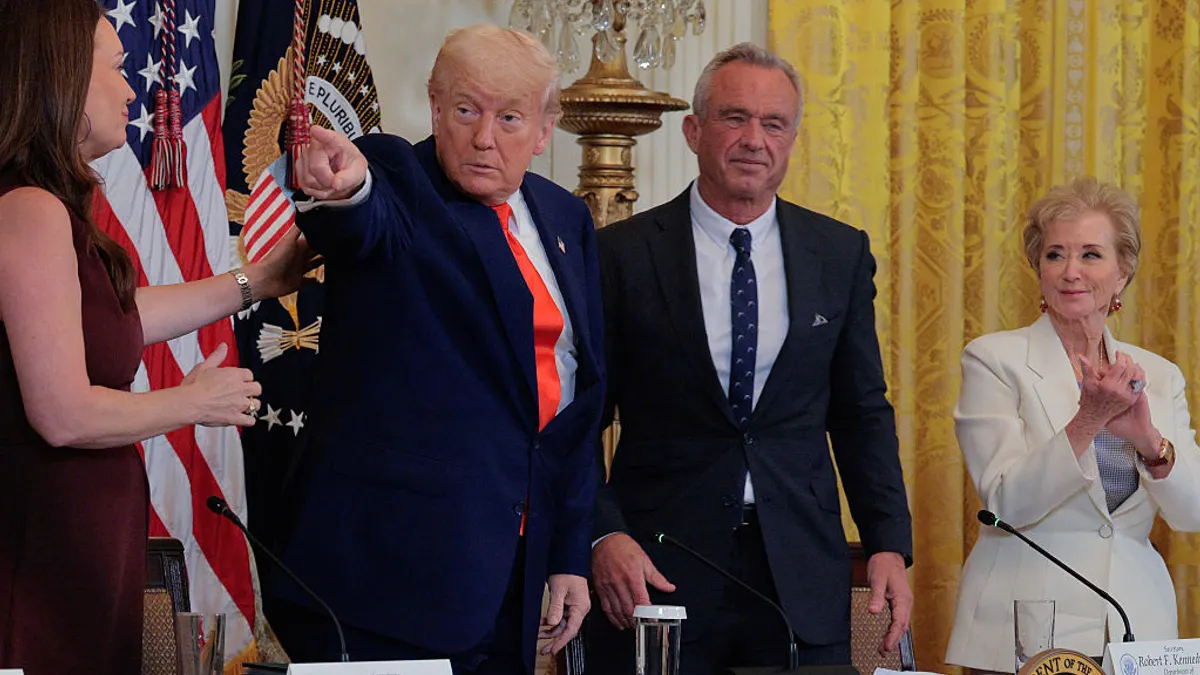
The recently released “Make Our Children Healthy Again” report promotes initiatives for healthy school meals across the country. The document outlines the importance of limiting artificial dyes and promoting whole foods in school meals. Government officials are working to create a uniform definition for ultra-processed foods to ensure all schools meet the same nutrition standards for purchasing ingredients. The report also emphasizes that the farm-to-school grant should be improved to support relationships between schools and local producers. The spokesperson for the School Nutrition Association shared that recommendations for improving school meals must be “operationally feasible,” as schools need to make changes without increases in budget or operational support. The Big Beautiful Bill may also impact schools’ ability to alter school meals, as cuts to Medicaid and the Supplemental Nutrition Assistance Program could decrease school funding for meals.
The 74: New Mexico Governor Announces Free Universal Child Care
New Mexico is the first U.S. state to offer universal free child care. The Early Childhood Education and Care Department will expand existing rules that offer free child care for families whose income is up to 400% of the federal poverty level. Families will now save an estimated $12,000 annually on child care costs. The state will also allow local governments and schools to apply for low-interest loans to expand or create child care facilities, which could add up to 13,000 new child care slots. Child care providers who meet certain requirements are also eligible to receive additional funding. These policy developments are a result of the state’s six years of work on early childhood supports, as well as an increased budget to support these efforts. The law will go into effect on November 1.
Around the Nation

The 74: Child Care Scholarships Help Families Experiencing Sudden Household Disruptions
A child care center in Toledo, Ohio, has a scholarship program to help families experiencing unexpected financial difficulties. Research has indicated that parents may quit their jobs or drop out of school to care for their children instead of enrolling in child care due to high costs. This trend is prominent in Ohio, where child care programs have closed or are consistently under-enrolled. Toledo Day Nursery is the oldest child care center in Ohio and the fourth oldest in the United States. It has a long relationship with working-class families. The scholarship program was launched last summer and differs from other initiatives because it is funded by a family foundation, and families do not need to complete a long application process. The director of the child care center started the program because of her personal experience with encountering financial stress while parenting young children. Many families in the program are not eligible for government-subsidized daycare programs and rely on Toledo Day Nursery for support.
The New York Times: They Created a Streetwear Line From Scratch. In High School.
Students at Earl Monroe New Renaissance Basketball School participated in an after-school entrepreneurship and finance course, where students learned about savings accounts, credit cards, and how to run their own businesses. The school in the Bronx was created to inspire students through basketball, with related courses on sports analytics, journalism, and nutrition. The business program was developed in response to a question posed to the ninth-grade class: “What more do I want out of school?” One group of students created streetwear apparel that would appeal to young customers in their community. The clothing is orange to symbolize gun violence prevention efforts, and is called “EVNTLLY” as a “beacon of hope for young people like us.” The students successfully pitched their products to be included in the official NBA store on Fifth Avenue in Manhattan in a section for emerging designers.
Like what you see? Sign up to receive this summary in your inbox as soon as it is published.