Here’s the new edition of The Weekly Connect. Check it out and sign up to have it delivered to your inbox!
Students receiving mental health services face widening academic disparities.
At least 32 states are considering restrictionson ultra-processed school meals.
California students help transform school yards into greener, cooler outdoor spaces.
Research and Practice
Research and Practice
Journal of Youth and Adolescence: A Meta-Analysis of Participation in Organized Activities and Academic Outcomes: Implications for Theory, Policy, and Practice
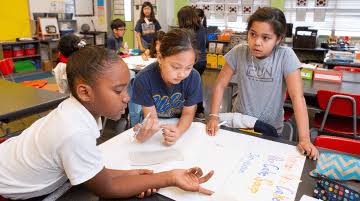
Millions of young people around the world participate in organized activities, which are linked to improved academic outcomes. However, no meta-analyses have examined whether both after-school programs (e.g., tutoring, arts and crafts) and extracurricular activities (e.g., sports, theater) are associated with improvements in student achievement. Researchers examined 117 studies between 2007 and 2024 that analyzed organized activities and four academic outcomes: school attendance, grades, standardized test scores, and educational attainment for children and adolescents. They found that participation in organized activities was positively associated with grades, standardized test scores, and educational attainment, but not school attendance. School-based activities were more strongly linked to improved grades and test scores, which did not vary by participant or activity type. The researchers recommend that policymakers and funders work to expand after-school programming to ensure that all children can benefit from its impact on academic performance.
Journal of Child Psychology and Psychiatry: Widening Educational Inequalities for Young People Attending Child and Adolescent Mental Health Services: A Longitudinal Cohort Study
Previous research has shown that an education gap—a disparity between low and high achievers—emerges for individuals with severe mental health diagnoses compared to their peers. A nationwide study in Wales examined young people who received mental health services and their scores on the General Certificate of Secondary Education (GCSE) exams at age 16. Participants were divided into two cohorts by birth year: 1992-1997 and 1998-2003. The younger cohort had increased educational attainment as well as participation in mental health services. Participants in both cohorts who received mental health services were significantly more likely to fail to meet the lowest grade level (Level 1, equivalent to a letter grade of D-G) on their GCSEs compared to their peers, with the younger cohort having a larger gap compared to the older cohort. Because achieving level one GCSEs is a requirement for students pursuing further education and types of employment in the United Kingdom, the researchers recommend that future studies investigate the causes of this educational gap to improve lifelong outcomes for children with mental health diagnoses.
Policy
The Washington Post: States Move to Take Ultra-Processed Foods Off the School Lunch Menu
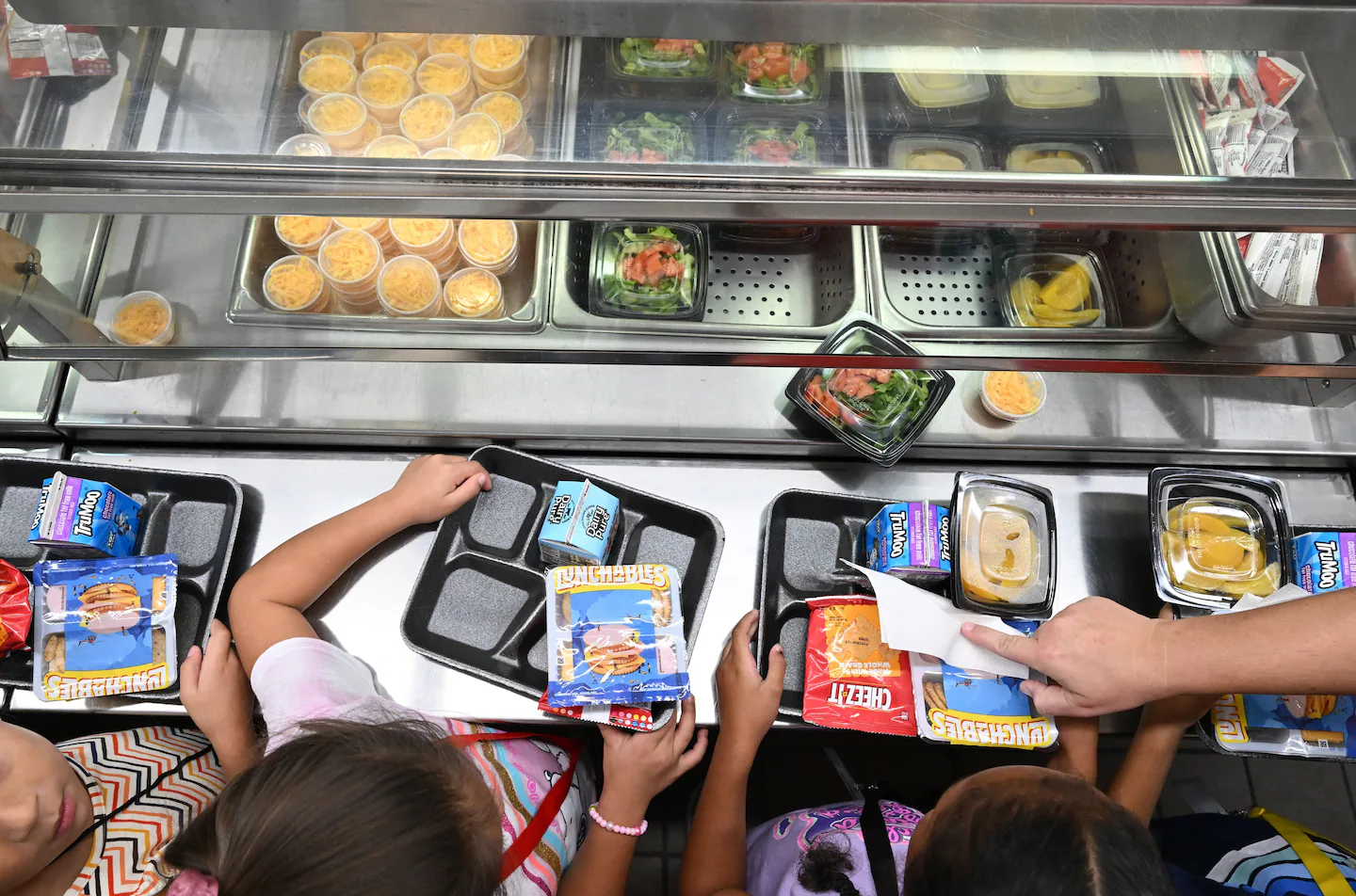
Lawmakers in at least 32 states have introduced legislation to limit or eliminate ultra-processed foods (UPFs) in school meals. Two states have already passed legislation in alignment with the Trump administration’s Make America Healthy Again movement, though the specific guidelines differ. Arizona legislators defined UPFs as containing one of 11 ingredients. California’s law includes any food item with an ingredient created or separated in a lab. All public schools must begin to phase them out by 2029, with these foods banned entirely by 2032. Some districts in California have already made these changes. California schools receive $6 per student per meal and have access to the country’s largest agricultural industry, allowing them to adopt new food policies more easily than other states. However, other states are concerned about the feasibility of cooking meals without UPFs, including the added costs of unprocessed food, kitchen equipment, and training for cafeteria staff.
K-12 Dive: Trump Administration: English Learner, Other Minority Protections ‘Not Enforceable’
The U.S. Departments of Education and Justice are no longer enforcing seven guidance documents, resources, and civil rights enforcement approaches for school districts related to race, disability, and other protections. Some of these documents have already been quietly rescinded. One guidance document created requirements for supporting English language learners, including adequately staffing programs. Other documents maintained equitable education policies for marginalized students after a U.S. Supreme Court ruling that prohibited race-conscious admissions decisions, as well as previous protections during the COVID-19 pandemic to prevent harassment of Asian American and Pacific Islanders in schools. These changes in protections align with other actions by the Administration to decrease federal civil rights enforcement, including changes to disparate impact regulations, which prohibited neutral policies that detrimentally impacted legally protected groups.
Around the Nation
EdSource: In the Sweltering Central Valley, This District Greened Its Campuses — and Made the Process Part of the Curriculum
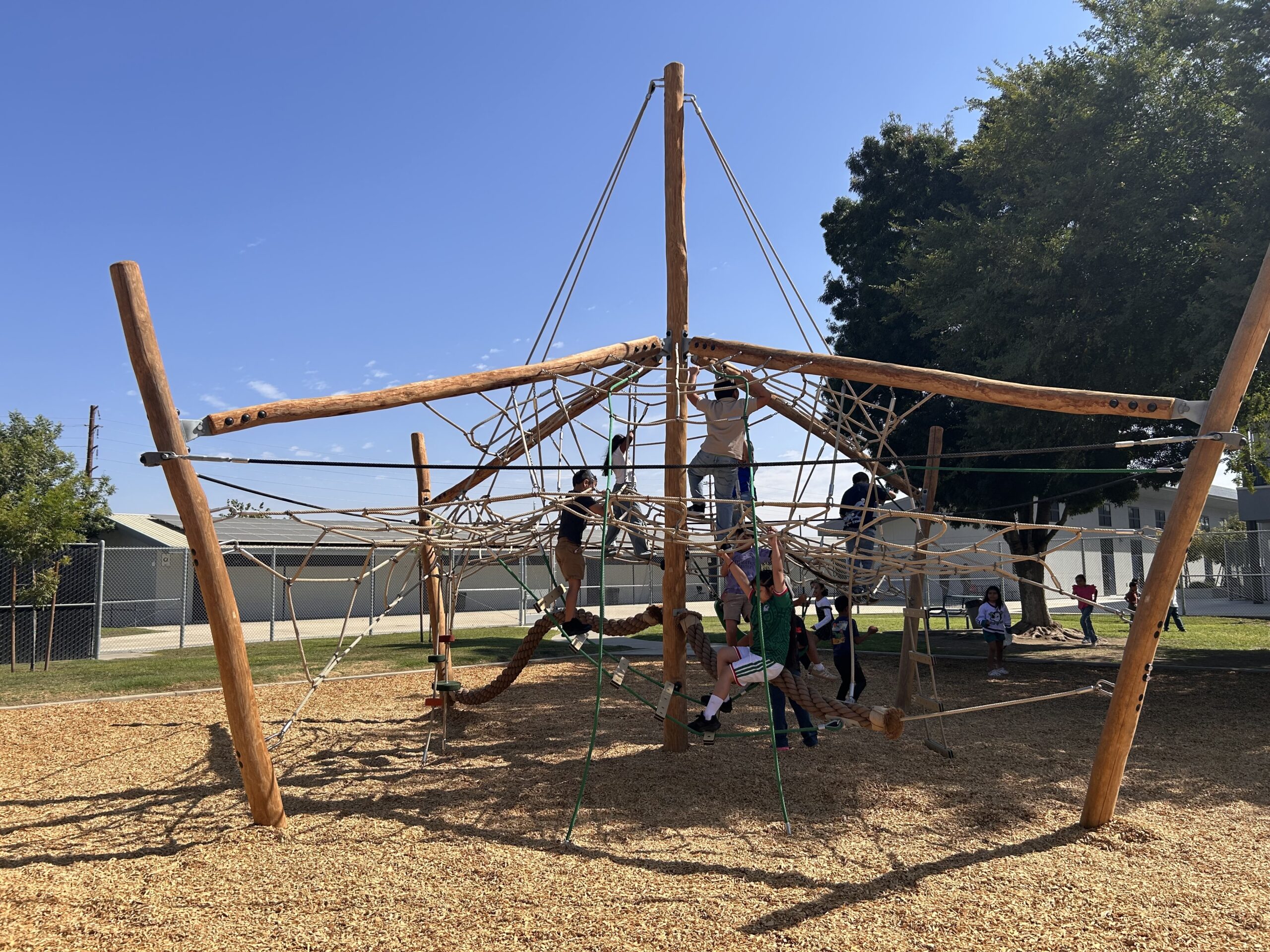
Schools in California aim to make their campuses more resilient to climate change by redesigning playgrounds, turning green spaces into outdoor classrooms, and studying the environmental impact on school grounds. High school students in the Porterville Unified School District completed an internship with the nonprofit Climate Action Pathways for Schools. They found that at one elementary school, only three percent of the grounds accessible to students had tree canopies. This rate is far from the state average of 6.4% and the 30% recommended in urban communities by the U.S. Department of Agriculture. The space, described as “dead and uninviting” by the student body president, now encourages more students to play. The schoolyard has 50 new trees, landscaping that provides shade and foliage, and a footpath. The equipment is also now made out of wood, which is cooler for students to play on. The school principal shared, “It’s more than just a play zone. It really uplifts our neighborhood… and sends a message… that we are important.”
WYSO: Tribal Cultural Educators Visit Ohio Fourth Graders to Teach History From Native Perspective
Students from Fort Recovery Elementary and Middle School in Ohio learned about indigenous history directly from citizens of Ohio’s three tribal nations. The event, Beyond the Battlefield, was organized by the Fort Recovery State Museum and hosted for the first time in a school at the request of the Wyandotte Nation. Students learned that Fort Recovery was the site of two Northwest Indian War battles and afterwards, all three tribes were forcibly removed from the state. Students spent the day learning how to process corn, bead wampum belts, and make corn husk flowers. Reflecting on the experience, a member of the Eastern Shawnee Tribe shared, “Sometimes it’s their only exposure to it until they reach high school… it makes it more rich, but also I think it’s probably the most valuable thing that we can be doing as educators.” Educators, students, and parents appreciated the opportunity to learn more about the history of where they lived and to have cultural experiences with the tribes.