Here’s the new edition of The Weekly Connect. Check it out and sign up to have it delivered to your inbox!
NAEP shows record-low 12th grade math and reading scores, with fewer students college-ready.
Texas’ new parental consent law leaves school nurses uncertain about what care they can provide.
New York City opens the first HBCU preparatory high school, offering dual enrollment and guaranteed admission to Delaware State.
Research and Practice

Chalkbeat: NAEP Scores for Class of 2024 Show Major Declines, with Fewer Students College Ready
The National Assessment of Educational Progress (NAEP) released The Nation’s Report Card, highlighting 12th graders’ academic performance. Students scored historically low on math and reading assessments. The gap between high- and low-performing students in math was the highest gap identified in the report’s history, and only the highest performers in the 90th percentile received the same scores as those in 2019. These results are similar to a January report on fourth- and eighth-grade performance, as well as eighth-grade science results released this month. Students who completed the testing missed more days of school in the month before the assessment compared to 2019 test takers. This may be one reason for the decline in performance, as research has shown that higher attendance in school is linked to increased NAEP scores. Students also reported feeling less confident in their math and reading abilities compared to 2019 respondents. Educators are concerned that students will not be as prepared for college-level courses compared to students in past years.
K-12 Dive: California Discipline Data Show Widespread Disparities Despite Reforms
A new report from the National Center for Youth Law found that despite California’s efforts to reduce discipline disparities, some students are still suspended and expelled at high rates. The report uses data from the 2017-19 to 2023-24 school years and includes a metric that calculates the number of school days lost by offense category. Most student suspensions were due to minor misconduct, such as profanity. Researchers found that Black foster youth had the highest discipline rate, which led to 15 times the rate of lost instruction compared to white students. Students with disabilities lost 23.4 days of instruction, which is almost three times higher than students without disabilities. Several schools have made improvements in disproportionate discipline, which may be due to the districts connecting students with individual services rather than focusing on punitive measures. The report suggests that state officials should focus on providing services and increasing support for students who are more susceptible to being suspended and expelled.
JAMA Network Open: COVID-19 Pandemic Exposure and Toddler Behavioral Health in the ECHO Program
A new study measures the relationship between toddlers experiencing the COVID-19 pandemic and parent-reported internalizing (e.g., anxiety and depression) and externalizing problems (e.g., conduct and behavioral issues). Previous research exploring the impact of the pandemic on children showed mixed results. These researchers hypothesized that toddlers assessed during the pandemic would have higher internalizing and externalizing problems due to pandemic-related stressors. Utilizing toddler-aged data from the Environmental Influences on Child Health Outcomes program, researchers found that toddlers born before or during the pandemic and assessed during the pandemic had fewer internalizing and externalizing problems compared to toddlers born and assessed before the pandemic. These results suggest that the pandemic did not have a strong impact on toddlers’ behavioral difficulties, and future research can explore what promoted resilience in toddlers during this time.
Policy

The Hechinger Report: State Preschool Program Helps Kids Catch Up — But Many Are Missing Out
In the 1980s, the landmark court case Abbott v. Burke (1985) aimed to equalize state funding for public schools in New Jersey. Districts in areas with higher property values were spending more than schools in low-income districts, which violated the state’s constitutional obligation to provide a strong education for all children. The ruling led to important legislation, including a ruling in 1998 that required free preschool for children in New Jersey’s highest-poverty urban districts. Recent research has shown that in the program’s 25th year, over 10,000 eligible children are still not enrolled in the program. Educators believe that this may be because families are unaware of the programs or do not want to send their children to school at an early age. Research has shown that these preschools have closed educational gaps for Black, Latino, and low-income children and have led to higher scores in academic tests and decreased grade retention.
The Texas Tribune: Texas’ New Parental Consent Law Leaves School Nurses Confused About Which Services They Can Provide to Students
In June, Governor Greg Abbott signed the Texas Parents Bill of Rights, which outlines a diversity, equity, and inclusion ban in K-12 schools. One aspect of Senate Bill 12 requires school health providers to ask for parental consent so their children can receive medical services at school. School nurses expressed concerns that the bill had vague language, which led to some refusing to provide Band-Aids or ice packs without parental consent in fear of legal repercussions. New guidance was shared after the September 1 release, stating that school nurses can provide “general caretaking” for students, such as feeling a child’s forehead or applying a Band-Aid. School districts have responded in various ways to the new bill, with some sending families a list of medical services a student may need and asking if families want to opt out. Other schools have told parents that if they want to opt out of one service, the school will call them for each issue, regardless of severity, unless it is life-threatening.
See also:New Texas Education Agency Guidance for Healthcare and Consent in Schools Amid “Fear … and Vague Language” Concerns
Around the Nation
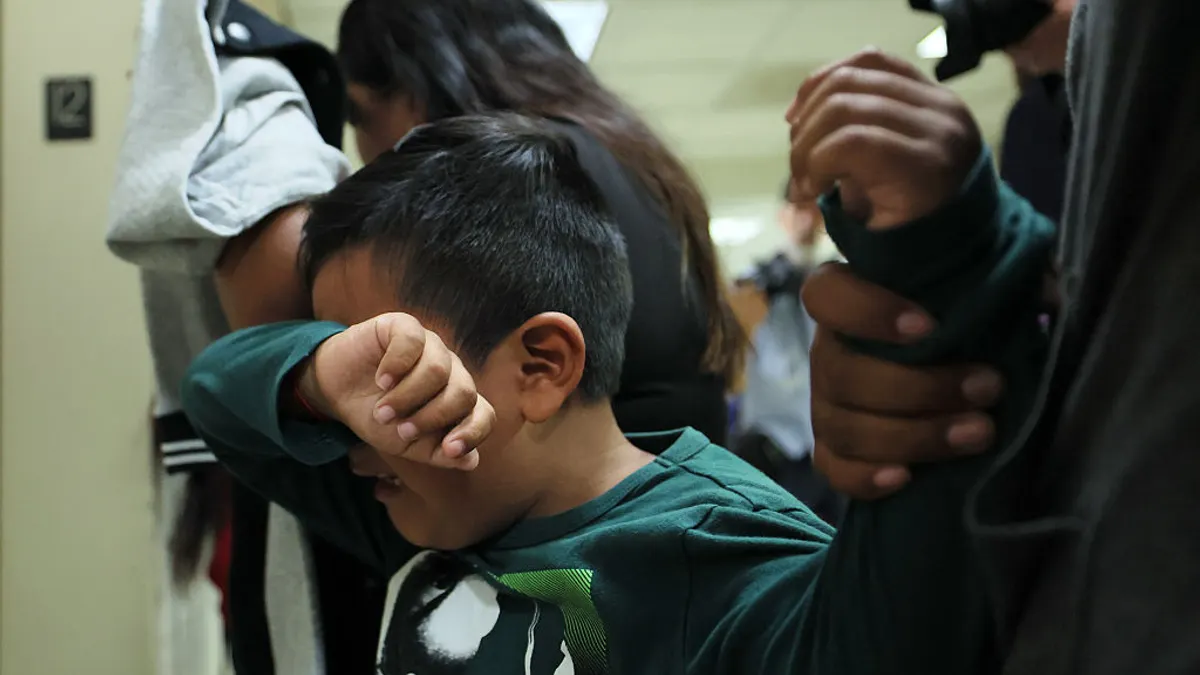
K-12 Dive: Immigration Enforcement Causing Trauma and School Avoidance, Educators and Advocates Say
Educators across the country have reported that families are fearful of returning to school due to concerns over Immigration and Customs Enforcement officers. School districts have taken different approaches to prepare for the school year and lessen concerns from parents and children. For example, in Los Angeles, school staff called 14,000 families and went to 2,000 homes to provide resources to families on students’ legal rights. The school district increased on-site counselors and social workers and is working to distribute money from the district’s foundation to families for legal aid. Teachers’ unions have collaborated with school boards to adopt safe zone policies, which provide information for the community and procedures for law enforcement. A child clinical psychologist shared the importance of creating safe spaces in schools to support all children: “a sense that no one and nowhere is safe is fundamentally damaging.”
ABC News: ‘It’s Important Because it Doesn’t Exist’: First-of-its-Kind HBCU Prep School Opening in New York City
New York City officials have opened the first Historically Black College and University (HBCU) preparatory high school in Queens. 1,000 students competed for only 100 spots, with students’ applications including responses on how they will use their degree to help others in their community. The school is designed to prepare them to be active members of society, with the new principal sharing, “We want them to know that from the minute they walk into the doors, how much we love and care for them.” Starting in 11th grade, students can begin dual enrollment and obtain college credits. Upon graduation, students will receive up to 64 college credits for an associate’s degree and are guaranteed admission to Delaware State University. HBCUs enroll 10% of all Black undergraduates, with high numbers of students becoming doctors, lawyers, and judges. Students in New York may have less exposure to HBCUs compared to students in other states, as the northernmost HBCUs on the East Coast are in Pennsylvania.
Like what you see? Sign up to receive this summary in your inbox as soon as it is published.