When I joined the team at City Connects, I knew I was stepping into an organization that shared my passion for making a difference. As someone who could have benefited from the program’s services, City Connects’ mission to build bright futures for all children resonated deeply with me.
My role as the Social Media and Communications Coordinator is to highlight the research we do, share our knowledge within the field of integrated student support, and showcase the stories that transpire through our work—stories of students who thrive when given the right support, of educators who feel empowered, and of communities that rally behind their children.
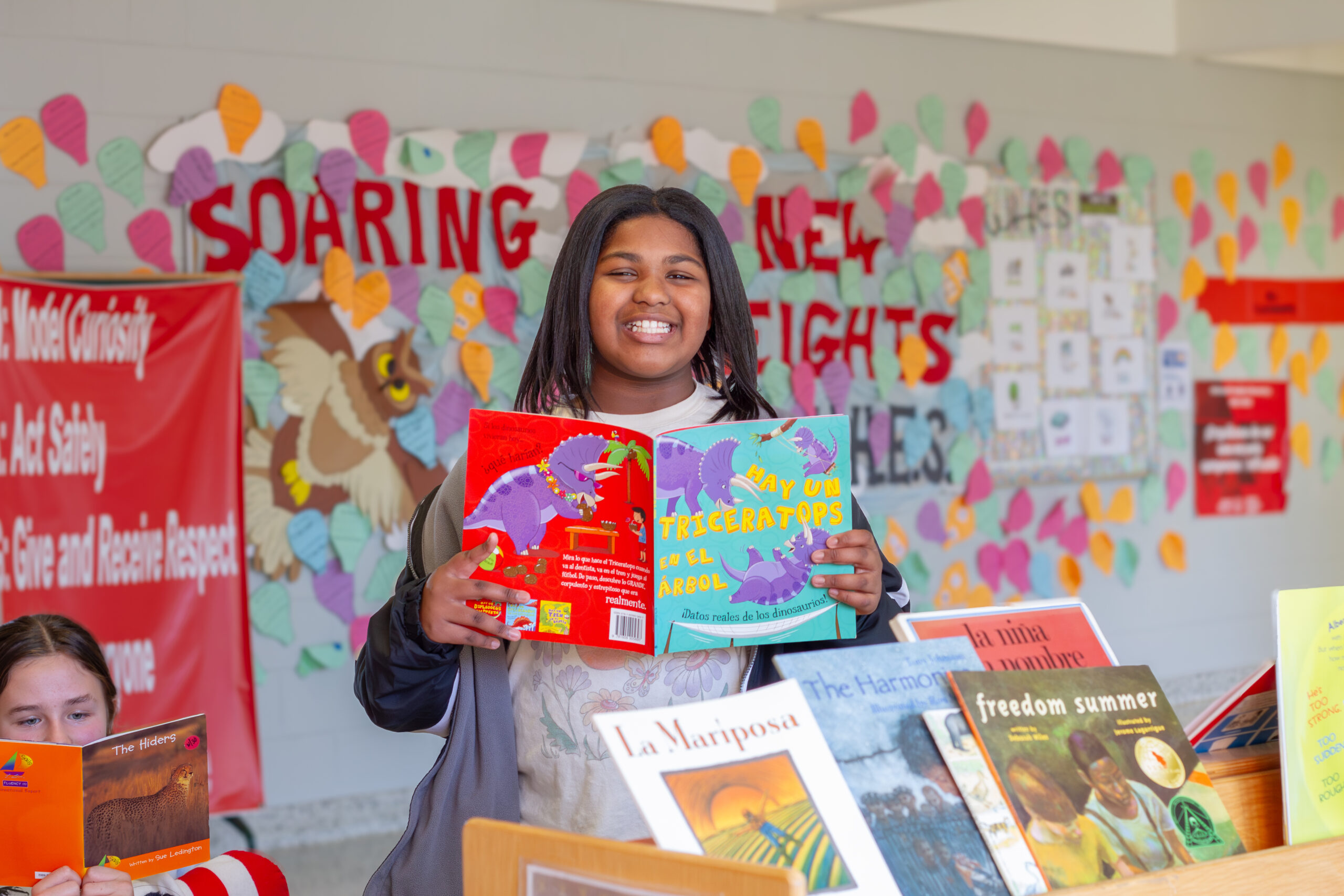
When the opportunity arose to visit a City Connects school and capture our work in action, I jumped at the opportunity to see firsthand how our approach translates into daily practice. What I didn’t expect were the organic, unscripted moments that reminded me why this work matters so deeply.
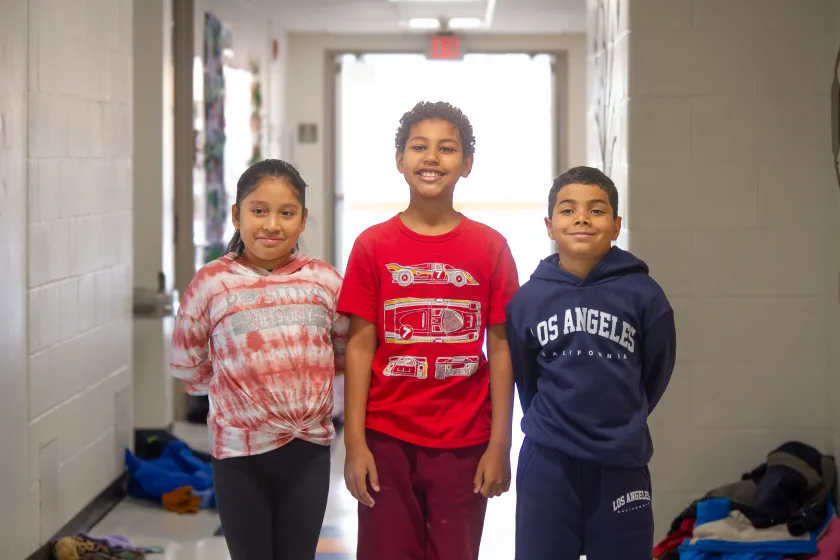
In Salem, Massachusetts, a strategic focus on student support is yielding impressive results. Implemented across Salem’s public schools since 2018, City Connects weaves a network of personalized support, ensuring every student’s strengths and needs are recognized.
The program’s evidence-based approach addresses barriers to learning by connecting students with tailored services and opportunities. Whether it’s academic help, extracurricular engagement, or mental health services, the program connects students with the right resources at the right time.
Recently, Salem Superintendent Stephen Zrike announced a series of milestones, as they saw their four-year graduation rate increase to 80.6 percent, its highest rate since 2017-18, while their drop-out rate and chronic absenteeism rate have both decreased significantly. Among these achievements, the dropout rate has reached a remarkable low of 2.8 percent, returning to pre-pandemic levels. Zrike credited the collective effort, saying,
“Special thanks go to our staff, students, and their families for the hard work to ensure that all of our students graduate with their diploma and so many other credentials, certificates, and credits.”
Central to this success is Salem’s 2023-2026 Strategic Plan, which envisions a “diverse and welcoming community that promotes the academic, social, emotional, and physical development of each student through the equitable delivery of challenging, relevant, and joyful learning experiences.” A key part of this vision is City Connects, an integrated student support model that has become a cornerstone of Salem’s approach to education.
The schools of Salem offer a firsthand look at what an established City Connects approach to support looks like in action within a school’s ecosystem. The City Connects staff are an integral part of the Salem community. Many of them already worked in the Salem schools and applied to become City Connects Coordinators. They help set the tone for the school day-to-day and help the students engage in class, with their peers, and with their work. It quickly becomes clear how embedded City Connects is in the fabric of the community.
Seeing City Connects in Action
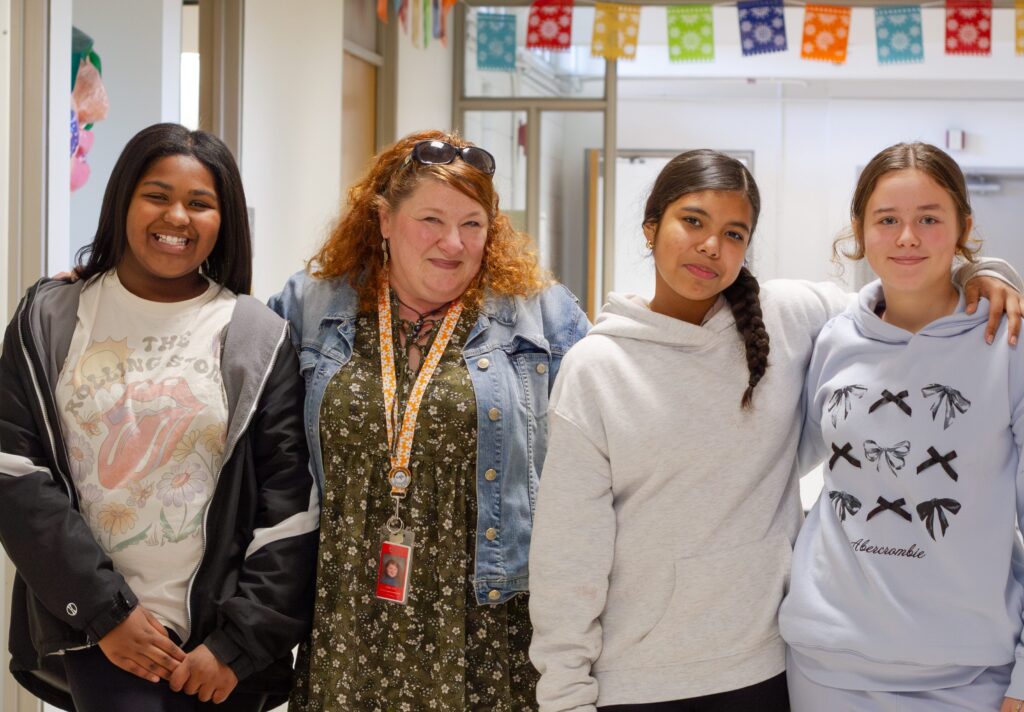
In the hallways of Witchcraft Elementary, I noted how instinctively attuned City Connects Coordinator Heather Perry was to each student. Always briefing me before entering a classroom, hinting which student would likely light up at the chance to be part of my photos, and taking moments to pause with others who might need a check-in. Her awareness of each child’s personality and wellbeing was evident.
Beyond casual conversations, these interactions serve a deeper purpose. At one moment, as we entered a gym class, I noticed a student sitting on the sidelines, visibly upset. Without hesitation, the Coordinator stepped in, offering reassurance and space to process their emotions. A few moments later, the child rejoined the group, smiling.
Recognizing when a student seems off, remembering to check in later, or anticipating how a particular child’s personality might shape their classroom experience; this level of attentiveness is not just about relationship-building; it’s a critical component of integrated student support.
These interactions underscored the vital role City Connects plays—not just as a program but as a presence. The Coordinators aren’t just supporting students academically; they are a trusted point of connection for emotional and social support.
By becoming part of daily lives of students, Coordinators become a bridge between children, teachers, and families—ensuring that their needs across four developmental domains (academic, social-emotional development, physical health and wellbeing, and family) are met.
Research shows that when students feel seen and supported, they are more likely to engage in learning and develop the resilience needed to thrive. These relationships are at the heart of the City Connects model, reinforcing that student success is not just about academics, but about the whole child.
The Hallway as a Place of Possibility
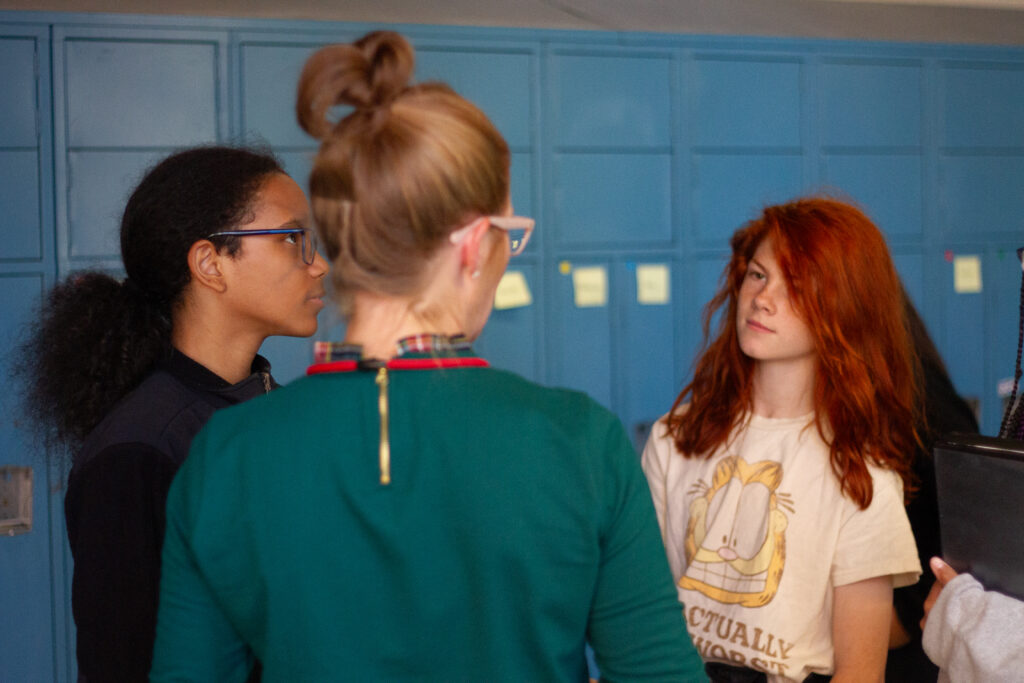
During my visit to the middle school, I noticed how the Coordinator’s role evolved to meet the shifting dynamics of pre-adolescence. Here, the energy is different—louder, more unpredictable, filled with the social negotiations that come with growing up. Coordinators expertly manage the lively environment, supporting students and teachers to maintain a structured and engaging space. Their adaptability bridges the gaps between all four developmental domains to create a space where learning and personal growth go hand in hand.
Observing the Coordinator’s organic interactions with students in the hallways reshaped my perspective on these spaces—not just as transitions between classes, but as vital moments for connection and support. A school hallway might seem like just a passage—a space between classrooms where real learning happens.
But as I walked through these schools, I saw something different. Hallways are vital arteries of the school community, where friendships are strengthened, challenges quietly surface, and students find moments of belonging.
For City Connects Coordinators, the hallway is more than a hallway—it’s an opportunity. A quick greeting, a check-in between classes, a reassuring nod—these small moments reflect their mission: ensuring that every child is seen, heard, and supported.
Just as hallways connect classrooms and faculty, Coordinators serve as the bridge between students, educators, and resources, weaving together the network of support each child needs to thrive.
By meeting students where they are City Connects transforms these in-between spaces into places of possibility. Every interaction, no matter how brief, is a step toward a stronger, more connected learning environment where students don’t just pass through—they grow.
As someone who works behind the scenes at City Connects, stepping into the schools was a rewarding experience that put into perspective how integral each Coordinator is to a school’s daily rhythm.
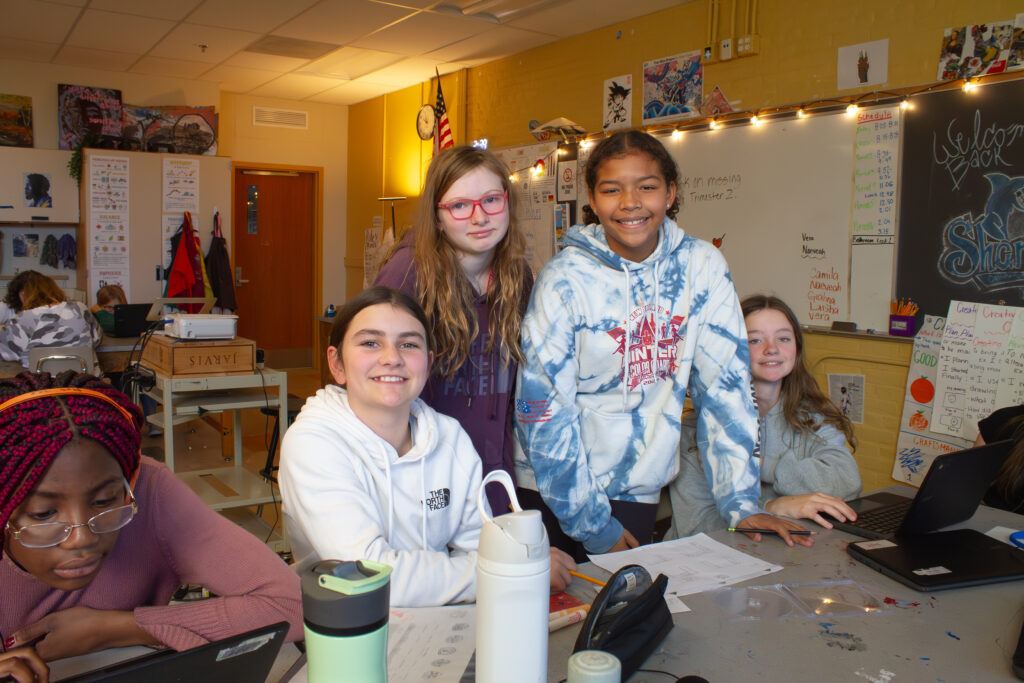
Throughout my tour, I witnessed the depth of connection between Coordinators and students. Walking down the hallways, it was impossible not to notice the way kids naturally gravitated toward their City Connects Coordinator—eager to share updates about school, extracurriculars, or simply to chat. These weren’t just quick hellos; they were genuine interactions that reflected deep relationships built on trust and care.
These everyday moments may seem small, but they speak volumes about the valuable relationships City Connects staff build with students.
A Model for the Future
City Connects’ role within Salem’s public schools is to help everyone in the school and the community better address each child’s unique needs to not only improve outcomes but also to foster a culture of belonging. As Salem continues to build on its successes, it is a testament to what’s possible when prioritizing the whole child.
Our partnership with Salem Public Schools exemplifies the power of integrated student support to help transform educational systems and, more importantly, to change lives.
For me, this visit was more than just an opportunity to capture photos—it was a moment of assurance. It reinforced why I do this work, why these stories must be told, and why City Connects matters.
Behind every data point is a student with dreams, a teacher with dedication, and a Coordinator making sure that no one is left behind.